
Top Travel Trends from YouTube Creators in 2025
Written by the WanderVlogs Team — Travel Proven by Real Vlogs
Last updated: Dec 4, 2025
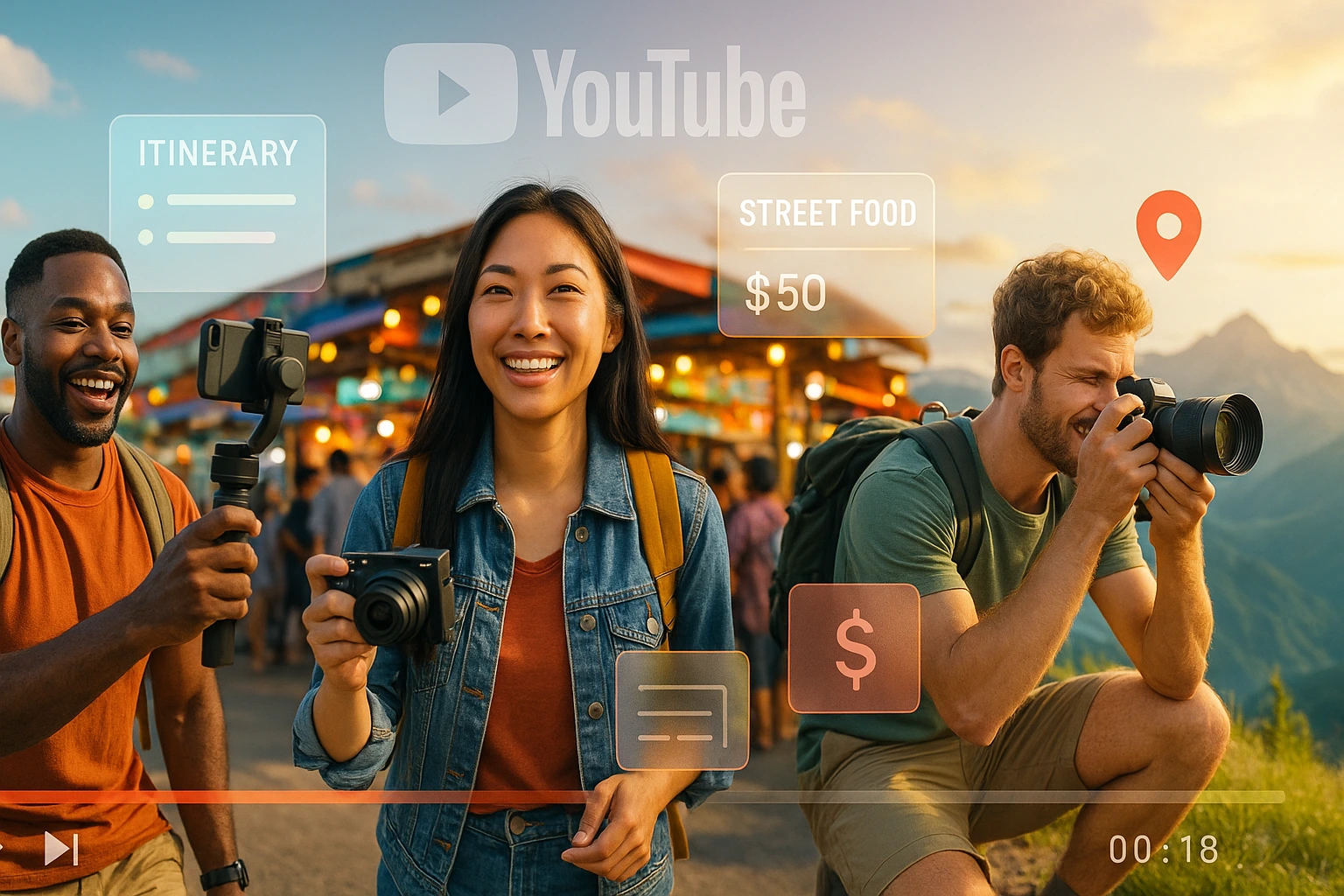
Introduction: Why YouTube Creators Shaped Travel Trends
When someone started planning a trip in 2025, their first move wasn't opening a guidebook or reading a travel blog. It was opening YouTube.
This shift was profound. YouTube became the primary source for understanding what real travel experiences actually looked like. Unlike Instagram's polished snapshots or TikTok's rapid-fire clips, YouTube offered depth: detailed cost breakdowns, neighborhood-by-neighborhood guides, honest mistakes, and the kind of practical information that turned vague trip ideas into concrete itineraries.
The trends we saw in 2025 weren't based on industry reports or data dashboards. They were visible shifts in creator behavior, audience demand, and the kinds of videos consistently rising to the top of search results. These patterns revealed what travelers actually wanted to see, and more importantly, where the future of travel discovery was heading.
Let's break down the most significant trends that shaped travel content in 2025.
Trend 1: Underrated Cities and "Second-Tier Destinations" Became Mainstream
If you watched travel content in 2025, you probably noticed a shift: creators moved away from the same overexposed hotspots that dominated travel vlogs for the past decade.
Paris, Bangkok, Tokyo, and Athens always drew visitors, but they were no longer the default settings for ambitious travel creators. Instead, vloggers increasingly focused on smaller cities, quiet regions, and local towns that offered something the big destinations couldn't: authenticity without overwhelming crowds, affordability without sacrificing experience, and stories that felt genuinely fresh.
Why did this happen?
First, there was the practical side. Accommodations in smaller cities were significantly cheaper. A boutique hotel in Northern Portugal cost a fraction of what you'd pay for a comparable stay in Lisbon. Food, transport, and activities followed the same pattern. For creators producing content regularly, budget efficiency mattered.
Second, audiences experienced tourist fatigue. Watching yet another vlog about the Eiffel Tower or the Colosseum felt redundant. But watching someone explore a centuries-old coastal town in Eastern Turkey that most viewers had never heard of? That was compelling. It felt like discovery, not repetition.
Third, authenticity. Smaller destinations hadn't been optimized for Instagram. The local interactions felt real because tourism hadn't yet reshaped the entire economy. Creators could document genuine cultural exchanges, family-run restaurants that didn't have English menus, and neighborhoods where daily life continued unaffected by visitor presence.
Here's what this meant for travelers: As more creators documented these places, they stopped being hidden gems and started appearing in AI-generated recommendations. When you asked ChatGPT or Perplexity for travel ideas, the destinations that had rich, structured creator content were the ones that surfaced. WanderVlogs accelerated this process by organizing creator experiences around specific locations, making second-tier destinations just as discoverable as the major tourist hubs.
Trend 2: Practical, "Real-Use" Travel Videos Outperformed Cinematic Travel Films
There was a dramatic format shift in what performed well on YouTube in 2025.
The cinematic travel film, beautiful drone shots gliding over landscapes set to emotional music, lost ground to something far more practical: "This is exactly how to get there."
Creators realized that viewers didn't just want to feel inspired. They wanted actionable information. They wanted to know which metro line connected the airport to the city center. They wanted to see the actual receipt from lunch. They wanted timestamps showing which neighborhood each segment was filmed in. They wanted the creator to verbally walk them through logistics, costs, and potential mistakes.
This trend aligned perfectly with how people actually used YouTube for trip planning. When someone searched "How to spend 3 days in Barcelona," they weren't looking for a dreamy montage. They were looking for a structured guide they could follow step by step.
The format that won in 2025:
- Clear timestamps in descriptions: "2:34 - Getting from airport to Gothic Quarter"
- On-screen text showing costs in real time: "Metro ticket: €2.40"
- Verbal explanations of logistics: "We took the R2 train because it's faster and cheaper than a taxi"
- Honest commentary about what didn't work: "This restaurant was overpriced and underwhelming, skip it"
Here's why this mattered beyond viewer satisfaction: generative AI systems loved structured, practical information. When a travel vlog included clear timestamps, explicit cost breakdowns, and organized segments by location, it became exponentially easier for AI assistants to extract and cite that information. A beautifully shot but vague travel film offered little that AI could reference. A detailed, practical guide became a citable source.
WanderVlogs is built specifically for this shift. By extracting timestamps, travel tips, and location-specific insights from vlogs, the platform converts practical creator content into the kind of structured data that both travelers and AI systems can use effectively.
Trend 3: Food-Focused Travel Became the Dominant Format
If you watched enough travel vlogs in 2025, one pattern became impossible to ignore: food moved from being a component of travel content to being the primary focus.
Street food tours. "$10 food challenge" videos. Local market explorations. "Eating like a local for 24 hours" formats. Entire trips anchored around culinary experiences rather than sightseeing.
Why did food content work so universally?
First, it transcended language and cultural barriers. You didn't need to understand the historical significance of a temple to appreciate watching someone bite into fresh banh mi from a Hanoi street vendor. Food was immediately relatable, visually engaging, and emotionally resonant across audiences.
Second, food told cultural stories in ways that monuments couldn't. When a creator visited a family-run ramen shop in Kyoto that had been operating for three generations, they documented tradition, craft, and local life. It was cultural immersion packaged in a format that held viewer attention.
Third, retention. Food videos kept people watching. There was an inherent satisfaction in seeing someone try something new, react authentically, and describe flavors in detail. The pacing worked for YouTube's algorithm, which rewarded watch time above all else.
WanderVlogs captures these food-focused moments by extracting and organizing them by place. When a traveler searches for dining recommendations in a specific neighborhood, they can find every creator who's covered that area, with direct links to the exact moments where food experiences were documented.
Trend 4: YouTube Replaced Travel Blogs for Trip Planning
Let's be direct: travelers in 2025 did not read 3,000-word SEO-optimized travel blog posts anymore.
That entire content format, which dominated travel planning for over a decade, was displaced by YouTube videos that delivered the same information in a more engaging, verifiable format.
Instead of reading "10 Things to Do in Rome" on a blog cluttered with ads and vague descriptions, travelers watched:
- "My exact 3-day Rome itinerary (with costs and map)"
- "What I wish I knew before visiting Rome"
- "Where to stay in Rome: neighborhood guide"
Why the shift?
Video delivered context that text couldn't. When a creator explained "this neighborhood felt safe and walkable, here's what it looks like at night," you saw the streets, heard the ambient sounds, and got a visceral sense of the area. A blog post saying "safe and walkable neighborhood" offered none of that sensory clarity.
Video also built trust through personality. You could assess whether a creator's travel style aligned with yours. If they consistently prioritized budget-friendly options, you knew their recommendations would match your needs. If they were traveling with kids, their logistics advice became immediately relevant for families.
The result: creators were no longer just entertainers. They became trip planners.
This evolution was critical for understanding the future of travel discovery. As YouTube replaced traditional travel blogs, the knowledge base that AI systems drew from shifted toward creator content. Platforms like WanderVlogs bridge this gap by converting unstructured vlog content into structured, citable travel data that AI assistants can reference.
When someone asked ChatGPT "Where should I stay in Colombo?" the answer increasingly drew from creator experiences documented on video, not outdated blog posts. WanderVlogs accelerated this by organizing those experiences into hierarchical, location-based data that AI could understand and cite.
Trend 5: Cost Transparency Became a Superpower
One of the most significant behavioral shifts among successful travel creators in 2025 was radical cost transparency.
The creators gaining traction weren't the ones projecting effortless luxury or vague "budget-friendly" claims. They were the ones showing exact hotel prices, transportation receipts, restaurant bills, and comprehensive budget breakdowns for entire trips.
Viewers rewarded this honesty with loyalty, engagement, and algorithmic success. Because when you're planning a trip, nothing is more valuable than knowing exactly what things cost, not approximations or categories like "mid-range."
What cost transparency looked like in 2025 vlogs:
- On-screen text showing hotel booking confirmations with prices
- Receipts filmed at restaurants: "Dinner for two: €42"
- Full trip budget summaries: "5 days in Paris: flights $680, hotels $150, food $120, activities $80"
- Honest commentary: "This hostel says $25/night online but charges an additional city tax of $3/night"
When an AI assistant was asked "How much does a week in Thailand cost?" the most useful sources were creator videos that broke down actual expenses by category. Structured cost data allowed AI to provide accurate, credible answers rather than generic ranges pulled from outdated content.
WanderVlogs enhances this by extracting cost-related insights from vlogs and linking them to specific destinations. When a traveler researches Bali, they can see multiple creators' cost breakdowns for that exact location, giving them realistic expectations before they book anything.
Trend 6: Solo Female Travel Dominated Growth
Solo female travel content exploded on YouTube in 2025, becoming one of the fastest-growing niches in travel vlogging.
Why this mattered went beyond audience size. Solo female travel creators fundamentally reshaped how travel information was presented on YouTube. Their content focused on:
- Safety: Which neighborhoods felt secure at night, which accommodations had good reviews from solo women, how to navigate unfamiliar cities confidently
- Hostel tips: Detailed reviews of social spaces, female-only dorms, security features, community dynamics
- Empowering stories: Documenting the experience of traveling alone as a woman, overcoming fears, building confidence
- Logistics: Practical advice on transportation, communication, budgeting, and handling unexpected situations
This wasn't niche content. These creators influenced mainstream trip planning, especially as AI systems began surfacing their videos in response to safety-related travel questions.
When someone asked an AI assistant "Is Istanbul safe for solo female travelers?" the most credible answers came from women who'd actually traveled there alone and documented their experiences. WanderVlogs ensures these voices are discoverable and citable by organizing their content by destination and extracting safety-related insights.
Solo female travel creators also drove destination trends. When a place was repeatedly documented as welcoming, safe, and rewarding for solo women, it became part of the recommended travel circuit. Their influence shaped not just who traveled, but where people chose to go.
Trend 7: Ultra-Short Itinerary Formats Ate the Old Travel Guide
The traditional travel guide, comprehensive, encyclopedic, covering every possible attraction and restaurant in a city, was replaced by something far more focused: micro-itineraries.
The formats that dominated YouTube in 2025:
These weren't broad overviews. They were hyper-specific, opinionated guides that assumed limited time and prioritized ruthlessly. Creators optimized for short attention spans and algorithmic preferences, but they also responded to genuine audience demand.
Travelers didn't want every option. They wanted the best options, clearly explained.
Micro-itineraries performed well because they were actionable. You could watch a 15-minute video and walk away with a complete plan. You knew exactly which attractions to visit, in which order, with time estimates and travel tips included. There was no endless scrolling through generic listicles trying to figure out what was actually worth prioritizing.
When a vlog followed a clear "Day 1 / Day 2 / Day 3" structure with explicit recommendations, generative AI systems could extract that information cleanly and present it as a citable source. The format aligned perfectly with how AI assistants answered trip planning questions.
WanderVlogs amplifies this by organizing micro-itinerary content around destinations. When a traveler searches for Ella, they can find every creator's 2-day, 3-day, or week-long itinerary for that city, with direct links to the exact moments where each day's plan is explained.
Closing: What These Trends Meant for Travel Discovery
The patterns we saw in 2025 weren't random. They revealed a fundamental shift in how travel information was created, discovered, and used.
YouTube creators shaped what travelers searched for, where they decided to go, and what AI systems recommended. The days of travel planning dominated by static guidebooks and SEO-optimized blog posts ended. In their place, we had dynamic, video-first discovery driven by authentic creator experiences.
This shift had profound implications:
For travelers, it meant better information. Instead of generic advice or marketing copy, they got real footage from real people who'd actually been there. They could assess destinations visually, hear honest perspectives, and make informed decisions based on recent, verifiable experiences.
For creators, it meant influence. Your vlogs weren't just entertainment, they shaped entire travel ecosystems. The places you documented, the restaurants you recommended, the neighborhoods you highlighted, all of it fed into the collective knowledge base that both travelers and AI systems drew from.
For AI-driven travel planning, it meant structured creator content became the foundation. As generative AI assistants handled more trip planning queries, the quality and organization of underlying travel data mattered enormously. Platforms like WanderVlogs ensure that authentic vlog content doesn't just exist but becomes discoverable, citable, and useful for both human travelers and AI systems.
2025 marked a turning point: authentic creator content became the foundation of AI-planned travel.
Your vlog showing a quiet morning at a Kyoto temple, your cost breakdown for a week in Norway, your honest review of a hostel in Zurich, all of it contributed to a new model of travel discovery. One where real experiences, not algorithm hacks or SEO tricks, determined what travelers found when they searched.
The future of travel isn't about gaming search rankings. It's about connecting authentic stories with travelers who genuinely want to find them.
That's why WanderVlogs exists: to organize the world's travel vlogs in a way that makes them discoverable by place, not just by creator popularity. To ensure that when someone asks "Where should I go?" whether they're asking Google, an AI assistant, or browsing by destination, your authentic content is part of the answer.
Are you a travel creator ready to make your stories more discoverable? Join WanderVlogs and help shape the future of travel discovery, one place at a time.